
Off-Page SEO, Simplified
Off-page SEO is everything that builds your reputation outside your website. Learn what it includes and six techniques that work.

Off-page SEO is the work done outside your own website that helps search engines and people trust it. It includes earning relevant links, brand mentions, genuine reviews, consistent local citations, digital PR and community involvement. It works together with on-page SEO and technical SEO, and it is earned over time, not bought.
- 1Off-page SEO is about reputation: links, mentions, reviews and citations from other places.
- 2Quality and relevance matter far more than the number of links.
- 3Never buy links or join link schemes. Google's policies warn against them.
- 4Good on-page content gives other sites a reason to mention you.
Once your pages are strong, the next question is how the rest of the web sees you. This is off-page SEO. This guide explains what it is, how it differs from on-page SEO and which techniques are worth your time. It is written by ARYAN MIYA MANSOOR, an SEO consultant in Lalitpur, Nepal.
What is off-page SEO?
Off-page SEO covers the actions and signals outside your own website that influence how search engines and people judge it. Think of it as your reputation: who links to you, who mentions you and what customers say.

Why is off-page SEO important?
Search engines look for signs that a site is trusted and useful. Relevant links, positive reviews and consistent mentions all point that way. Without them, even excellent content can struggle to stand out in competitive searches.

On-page SEO vs off-page SEO
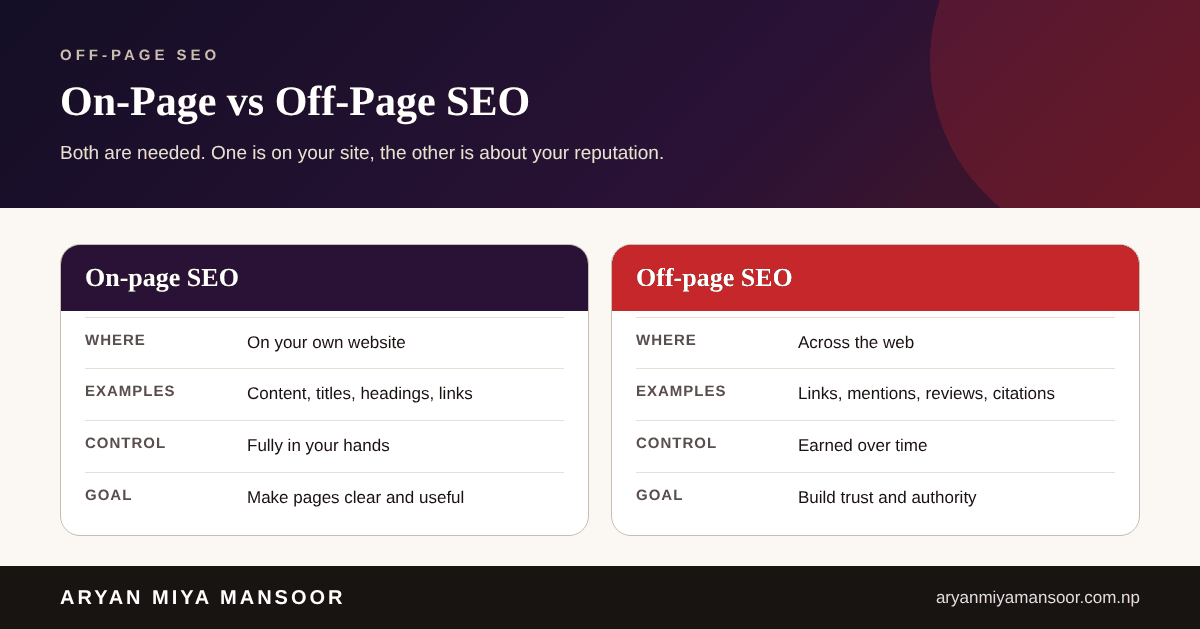
You need both. On-page SEO makes your pages clear and useful, while off-page SEO shows that others agree.
Six off-page SEO techniques that work
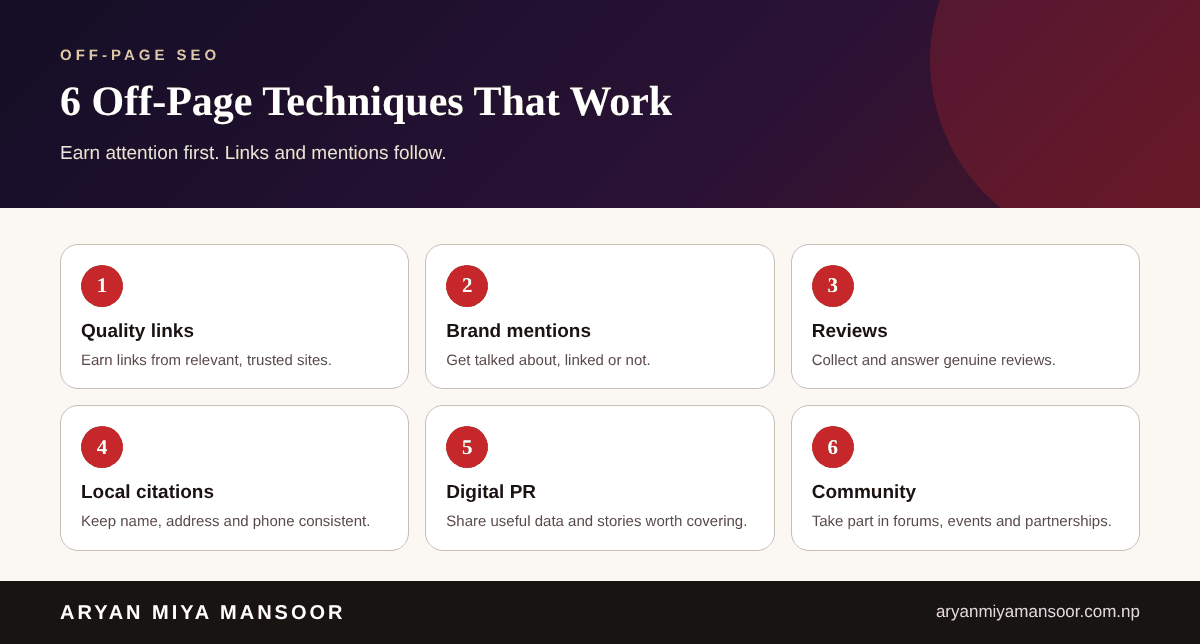
1. Earn quality links
Links from relevant, trusted sites are valuable signals. Earn them with useful content, original data and real partnerships. See my guide to link building for SEO for practical ideas.
2. Build brand mentions
Be mentioned in articles, directories and conversations, even without a link. Mentions build familiarity and trust.
3. Collect genuine reviews
Ask satisfied customers for honest reviews and reply to all of them. Never write or buy fake reviews.
4. Keep local citations consistent
Use the same business name, address and phone number everywhere, and keep your Google Business Profile verified. My local SEO guide explains the steps.
5. Do digital PR
Share findings, stories and expert comments that journalists and bloggers want to cite.
6. Join your community
Take part in events, associations and forums where your customers and peers gather. Real relationships lead to natural mentions.
What to avoid
- Buying links or joining link exchange schemes.
- Mass directory or comment spam.
- Fake or incentivised reviews that hide the incentive.
- Chasing the number of links instead of their relevance.
How to measure off-page SEO progress
Off-page work shows results slowly, so measure the right things. Track new referring domains, branded searches, mentions and the pages that earn links. In Google Search Console, watch whether impressions and clicks grow for the pages you promote.
- New links from relevant, trusted websites.
- Growth in searches for your brand name.
- Mentions in local news, directories and communities.
- Referral visits and enquiries from other sites.
Aryan Miya Mansoor advises reviewing these numbers every month and focusing effort on the activities that bring real visitors, not just links.
Off-page SEO mistakes to avoid
- Buying links or joining link exchanges, which can break Google spam policies.
- Posting low-quality guest articles only to get a link.
- Ignoring reviews and local listings that build trust.
- Chasing quantity instead of relevance.
Conclusion
Off-page SEO is long-term reputation building. Start with strong pages, earn relevant links, collect real reviews and keep your details consistent. If you want an expert plan, see my SEO expert in Nepal page.
Related reading
Frequently asked questions
Related searches and topics
Need help applying this in your market?
Sources and further reading
- Google Search Central: Spam policies (link spam) ↗
- Google Search Central: SEO starter guide ↗
- Google Business Profile Help ↗
This guide reflects my own hands-on experience and Google's published guidance at the date shown. Search changes, so check official documentation for the latest rules. Results vary by business and market; nothing here is a guarantee.
Aryan is Technical Director and SEO Manager at Softsaro Nepal and a senior SEO specialist with over 4 years of hands-on experience in SEO, Answer Engine Optimization and Generative Engine Optimization. He is based in Kathmandu, Nepal, and works remotely with businesses in Nepal and the UAE as an independent consultant, following Google’s published guidelines with no link schemes or ranking guarantees.